
Let’s be honest for a second. I’m getting tired of watching Indonesian politics turn into one giant fucking circus, where the government can screw things up, its supporters will find an excuse, and everyone else is somehow expected to clap along.
Apparently, being a good citizen now means defending the government like your life depends on it. Don’t question too much. Don’t criticize too loudly. And whatever you do, don’t acknowledge an obvious problem if admitting it might make your favorite politician look bad.
Because apparently, the real threat to Indonesia isn’t bad governance. It’s people talking about bad governance.
What a fucking joke.
The Economy Is Giving Warning Signs, but Sure, Let’s Talk About How Great Everything Is.

On October 16, 2026, Indonesia’s stock market plunged 11.57% in a single trading session after MSCI proposed consulting on a potential reclassification of Indonesia from an emerging market to a standalone market. The concerns included opaque shareholding structures, concentrated ownership, and suspected coordinated trading.
To be clear, the downgrade has not been finalized. MSCI’s final decision is expected by June 2027.
Source: Reuters, October 16, 2026
Now, I’m not saying a stock market crash automatically means the entire country is collapsing. That would be stupid. But when a global index provider raises serious concerns about the transparency and functioning of your capital market, maybe it’s time to stop pretending that everything is perfectly under control.
Maybe.
But knowing how political discourse works here, someone will probably find a way to blame the opposition, foreign conspiracies, previous administrations, global conditions, or that one random Twitter account with 37 followers.
Anything except the possibility that those in power might actually have something to answer for.
That’s the beautiful thing about political fanboyism: reality can punch you directly in the face, and you’ll still find a way to accuse the punch of being politically motivated.
The market doesn’t care about your campaign slogans. Investors don’t buy your patriotic speeches just because you deliver them confidently. And international institutions certainly don’t owe you a standing ovation because you keep talking about national greatness.
If the fundamentals are questionable, the fundamentals need fixing.
Not another fucking press conference about how misunderstood Indonesia is.
The Government Has Its Defenders. Unfortunately, Critical Thinking Didn’t Make the Recruitment List.

Let’s talk about the buzzers.
Not every government supporter is a buzzer, and not every political account is paid to promote a narrative. But we’ve all seen the kind of political discourse where defending a politician seems to matter more than understanding what the politician actually does.
A scandal emerges, and suddenly everyone becomes a lawyer.
A policy fails, and suddenly everyone becomes an economist.
An official gets criticized, and suddenly everyone becomes an expert in political conspiracy.
The speed at which some people transform into unpaid defense attorneys is honestly impressive. If only that same energy were applied to understanding public policy, checking sources, or demanding measurable results.
Imagine being so emotionally invested in a politician that you treat criticism of their performance as a personal attack against yourself.
Brother, you are not on the cabinet.
You are not sitting in the presidential palace.
You are not getting a cut of the state budget.
Why the fuck are you acting like the minister’s personal bodyguard on the internet?
And the funniest part? The politicians being defended might never even know these people exist.
Imagine spending your entire afternoon fighting strangers in a comment section to protect the reputation of someone who wouldn’t recognize your username if it appeared on their screen.
What a career.
What a contribution to civilization.
Of course, criticism should be based on evidence, and governments deserve credit when their policies work. But if your political position survives only by ignoring every inconvenient fact, then congratulations: you don’t have an argument. You have a coping mechanism.
When Disaster Funds Become a Corruption Investigation, What Exactly Are We Supposed to Clap For?

On October 14, 2026, the Corruption Eradication Commission announced five suspects in an investigation involving alleged irregularities at Indonesia’s National Disaster Management Agency, or BNPB.
The allegations concerned the use of ready-to-use disaster funds and procurement arrangements. The case remains subject to legal proceedings, and the allegations must be established through due process.
Source: ANTARA News, October 16, 2026
Let that sink in.
Disaster-response funding exists for emergencies. It is supposed to help institutions respond when people need assistance, not become the subject of allegations involving questionable procurement and potential conflicts of interest.
And before anyone starts screaming, no, an investigation is not a conviction. The allegations must be proven through due process.
But seriously, what the fuck is wrong with a political culture that makes people more concerned about defending institutions from embarrassment than demanding that those institutions operate properly?
Public money is not some politician’s personal allowance. Emergency funding is not a fucking privilege. And disaster victims should never have to wonder whether the resources intended to help them are being handled honestly.
If the allegations are proven, prosecute the guilty. Recover public money where legally possible. Fix the procurement system. Make sure the same shit doesn’t happen again.
That’s the bare minimum.
Nobody should have to beg their government to treat public funds as public funds.
And nobody should have to defend corruption simply because the people accused of wrongdoing belong to the political environment they support.
If your principles disappear the moment your own side gets investigated, then you never had principles in the first place.
You had a team.
And apparently, your team can do no wrong.
The Forest Is Burning. The Excuses Are Thriving.
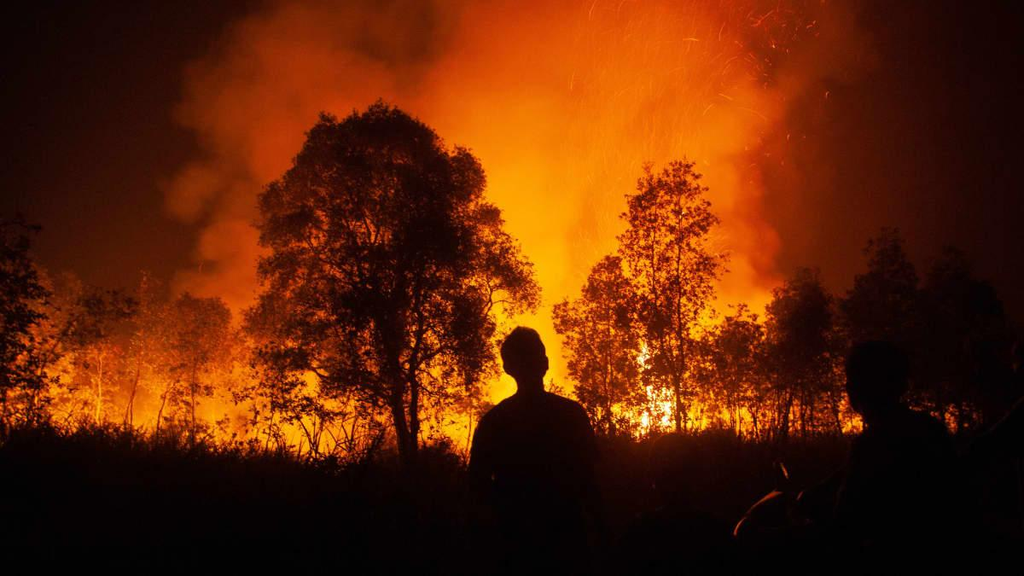
Indonesia has also been dealing with severe forest and land fires.
Reuters reported on October 15 that health ministry data recorded 283,270 respiratory illness cases linked to fires across seven provinces as of October 13. Smoke has disrupted daily life and affected neighboring countries.
Source: Reuters, October 15, 2026
Hundreds of thousands of reported respiratory cases. Communities affected by smoke. Environmental damage. Schools and transport disrupted.
And yes, the government has taken firefighting measures. Those efforts matter. But fighting a fire is not the same as solving the conditions that keep allowing fires to become a recurring crisis.
Where is the long-term accountability? What is being done about the underlying causes? Are enforcement and prevention strong enough? What measurable improvements should the public expect?
These are not anti-government questions.
They’re fucking normal questions.
But apparently, asking questions can become a revolutionary act when political loyalty matters more than public welfare.
You can appreciate firefighters and still criticize environmental policy. You can recognize the difficulty of managing a huge country and still demand better prevention. You can acknowledge genuine progress without pretending that every failure is somebody else’s fault.
Two things can be true at once. I know, shocking.
The government can do something right and still deserve criticism for what it gets wrong.
The problem is that some people seem incapable of holding both ideas in their heads at the same time.
They need their politicians to be heroes, their opponents to be villains, and every piece of evidence to fit neatly into that childish little storyline.
Meanwhile, people are the ones breathing the smoke.
The Most Annoying Part Is That the Public Helps Keep This Shit Alive.
Here’s the uncomfortable part: politicians don’t deserve all the blame for a political culture that the public keeps rewarding.
If people reward confidence over competence, politicians will learn to look confident.
If people reward spectacle over substance, politicians will learn to put on a show.
If people punish criticism more aggressively than failure, politicians will learn that controlling the narrative is more useful than fixing the problem.
And if voters apply one set of moral standards to their opponents and another to their favorite politicians, don’t act surprised when political hypocrisy becomes the national entertainment industry.
You cannot demand accountability from one party while manufacturing excuses for another.
You cannot complain about propaganda while sharing misinformation that happens to support your side.
You cannot claim to care about corruption while treating every investigation into your preferred political camp as a conspiracy.
That’s not political maturity. That’s intellectual dishonesty with a flag emoji attached.
And yes, this applies to everyone, including the opposition. Being anti-government doesn’t automatically make someone intelligent, honest, or correct.
But a government has power, public resources, and institutional responsibilities. That means it should face serious scrutiny, not unconditional worship.
The public isn’t supposed to be a fan club.
It’s supposed to be the fucking public.
Patriotism Is Not a Personality Disorder Called Defending Politicians.
I genuinely don’t understand why some people act as though criticizing the government means hating Indonesia.
Do these people think the country was invented the day their favorite politician took office?
Indonesia is bigger than one president, one cabinet, one political party, or one election cycle. The country belongs to its people, not to the people temporarily occupying positions of power.
A government is not the nation.
A politician is not your father.
A cabinet is not your football club.
And the national flag is not a magical shield that makes every policy decision immune to criticism.
If anything, loving your country should make you more demanding of its leaders, not less.
You should want public money handled properly. You should want transparent institutions. You should want better economic management, effective environmental enforcement, and public officials who can answer difficult questions without treating every critic as an enemy.
That is not hatred.
That’s having standards.
If you think a government is doing well, defend its policies with evidence. If you think it’s doing badly, explain why. If the facts change, update your position.
It’s not that complicated.
Unless, of course, your entire political identity depends on never admitting that your side might be wrong.
In that case, I suppose critical thinking becomes a threat to national security.
Anyway, Keep Clapping.
Maybe that’s the future of political discourse: the government makes promises, the public pays the bills, the critics get attacked, and the buzzers keep typing.
A market crashes? Find an excuse.
A corruption investigation begins? Wait for the conspiracy theories.
The environment suffers? Post a patriotic slogan.
Someone criticizes the administration? Call them a hater.
It’s a remarkably convenient system. The people in power get defenders, the defenders get a sense of moral superiority, and the actual problems get to enjoy another day without being properly addressed.
Everyone gets something.
Except the people who expected governance instead of performance.
And here’s what really pisses me off: none of this requires every politician to be evil or every supporter to be stupid. It only requires enough people to stop asking difficult questions whenever the answers become politically inconvenient.
That’s how a culture of impunity grows. Not necessarily because everyone approves of wrongdoing, but because too many people are willing to excuse it when the alternative is admitting they backed the wrong person.
So go ahead. Defend the government when it deserves defending. Celebrate policies that genuinely improve people’s lives. Give credit where credit is due.
But stop treating political loyalty like a fucking intellectual achievement.
Stop confusing criticism with betrayal.
Stop acting as though the government owes you nothing while you owe it unconditional faith.
Because when all is said and done, politicians will move on. Administrations will change. Campaign slogans will be forgotten. The people who spent years fighting strangers online to defend their favorite officials will eventually find something else to argue about.
The consequences, however, will remain with the country.
And the bill will still be ours to pay.
So, Indonesia, keep the slogans polished, the propaganda loud, and the comment sections busy.
Just don’t expect the rest of us to confuse the noise with progress.
— Rantissi Abdus Salam