
When war, climate instability, and invisible digital threats begin to overlap.
There is something unusual about the current state of the world.
Not necessarily because one extraordinary event is taking place, but because several different uncertainties seem to be developing at the same time.
Governments are reviewing emergency preparedness. Military tensions remain high in several regions. Climate forecasts are raising concerns about the months ahead, while cybersecurity incidents continue to expose how dependent modern societies have become on digital infrastructure.
Individually, these developments are nothing entirely new.
But what happens when they begin to overlap?
Perhaps the more interesting question is not whether another global crisis is coming, but whether the systems we depend on are prepared to handle several crises simultaneously.
The World Is Quietly Preparing
Across different parts of the world, emergency preparedness has become a more prominent subject.
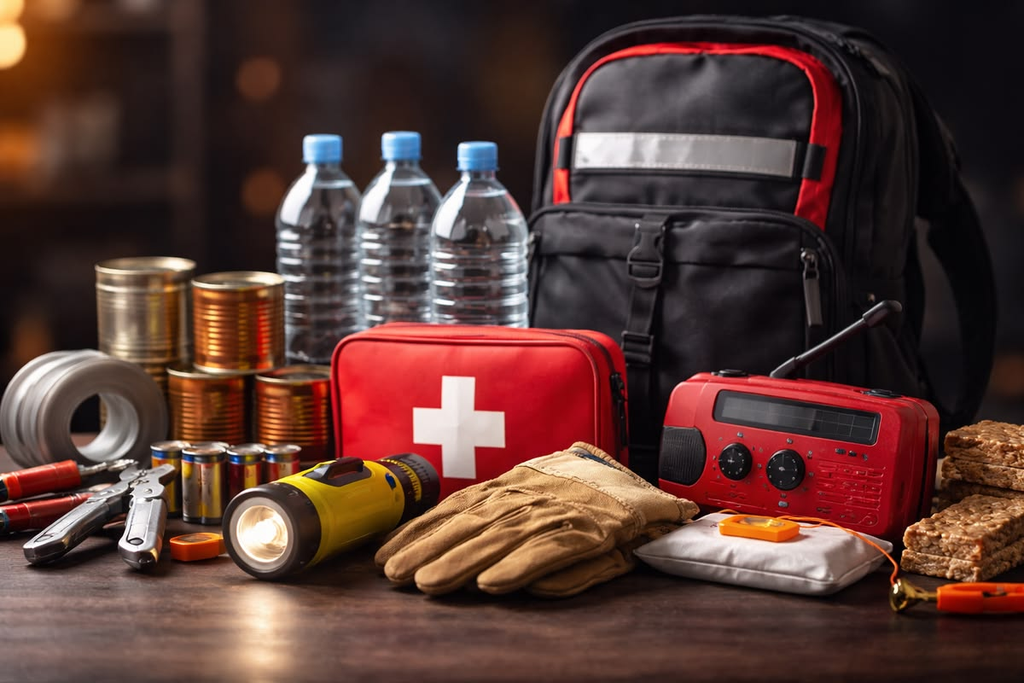
Reports discussing approximately 33 countries have drawn attention to government recommendations encouraging citizens to maintain basic emergency supplies.
Water, food, essential medication, flashlights, batteries, and communication equipment are among the commonly recommended items.
One particularly important example is the European Union’s Preparedness Union Strategy, introduced in March 2025. It encourages citizens to develop the ability to remain self-sufficient for at least 72 hours during emergencies.
This is not an announcement that war is inevitable.
Rather, it reflects a broader understanding that modern societies are vulnerable to disruptions that can affect essential services.
A natural disaster, infrastructure failure, geopolitical conflict, or cyberattack can all create situations in which ordinary services become temporarily unavailable.
And perhaps that is the point worth paying attention to.
Preparedness is increasingly being treated as a necessity rather than an afterthought.
November 7: A Date Surrounded by Questions
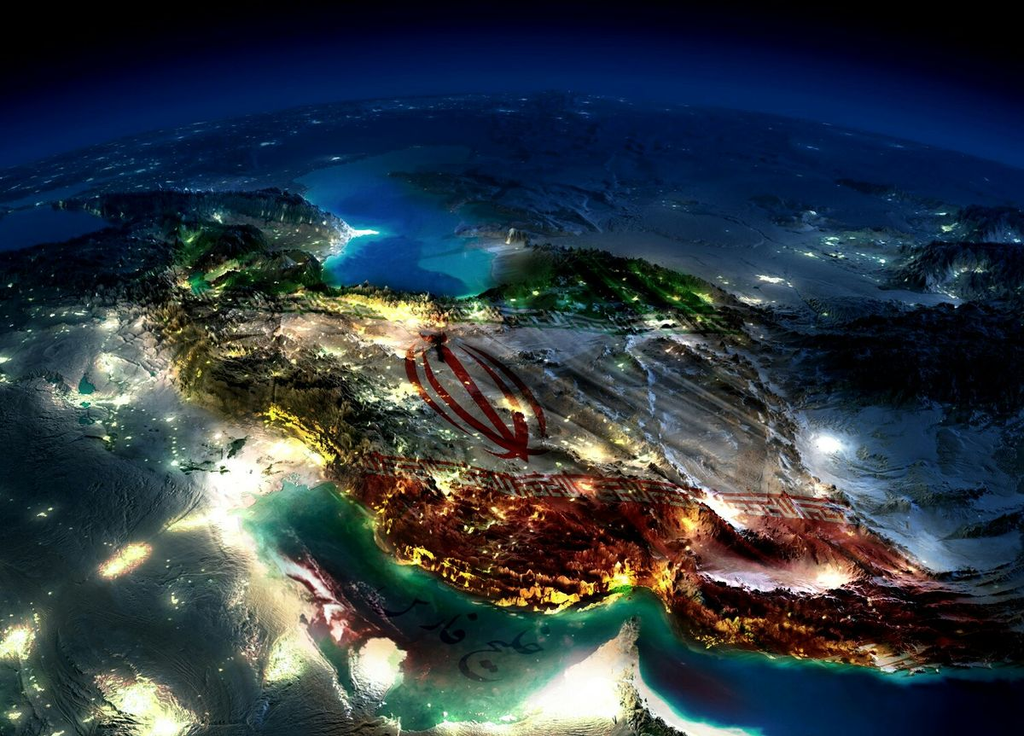
The situation involving the United States, Israel, and Iran deserves particular attention.
On November 1, 2026, Tucker Carlson published a statement on X discussing what he described as pressure from Benjamin Netanyahu on Donald Trump to consider a possible attack against Iran.
His statement included an extraordinary allegation involving a potential nuclear strike against an underground Iranian facility known as Pickaxe Mountain.
Carlson also mentioned November 7 as a potentially significant date.
The statement quickly generated discussion across social media.
However, it is important to separate what has been reported from what remains unverified.
There is no publicly confirmed evidence establishing November 7 as the date of a planned nuclear strike. A White House official also disputed Carlson’s access to the president’s military planning and decision-making.
Meanwhile, diplomatic tensions between Washington and Tehran remain a serious concern.
The situation deserves monitoring, particularly as military developments, diplomatic negotiations, and regional security concerns continue to evolve.
I find the broader uncertainty more significant than the viral prediction itself.
In international politics, a statement can attract millions of views within hours. But the actual decisions that shape international security often happen through diplomatic channels, military assessments, and negotiations that are not immediately visible to the public.
Not every alarming statement is a warning of an imminent event. But neither should genuine geopolitical tensions be ignored.
The Climate Doesn’t Follow Political Boundaries
While political attention is often directed toward military developments, another challenge continues to develop on a much larger scale.
Climate instability.
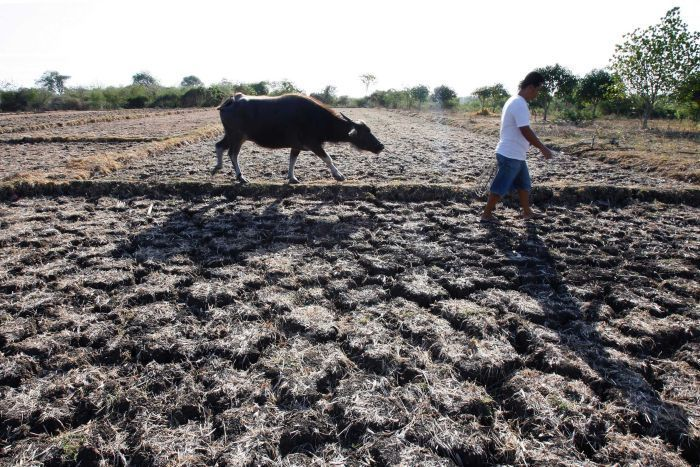
The World Meteorological Organization has warned about the possibility of a very strong El Niño event extending its influence into 2027.
Changes in global weather patterns can contribute to extreme temperatures, unusual rainfall, drought conditions, and agricultural pressure.
For Southeast Asia, these developments deserve particular attention.
Indonesia, like many countries in the region, depends heavily on relatively stable weather patterns for agriculture, water resources, and everyday economic activity.
Prolonged heat and changing rainfall patterns can affect crop production, increase pressure on water supplies, and create additional challenges for communities already vulnerable to extreme weather.
There is also an economic dimension.
Food production, transportation, electricity demand, and commodity prices are all connected to environmental conditions.
A climate-related disruption does not need to become a global disaster to create serious consequences.
Sometimes, its effects are gradual, regional, and easily overlooked until they begin affecting everyday life.
The Invisible Infrastructure We Depend On
One of the most overlooked dimensions of modern security is cybersecurity.
Most people understand cyberattacks through familiar examples: stolen passwords, compromised accounts, leaked databases, or financial fraud.
But the potential consequences extend much further.
Modern societies depend on digital systems to operate electricity networks, transportation, telecommunications, financial services, healthcare facilities, and food distribution.
A disruption to one of these systems can affect thousands or even millions of people.
Recent reports of cyber incidents affecting supermarket refrigeration systems in Europe illustrate how digital disruptions can have physical consequences.
It is a reminder that cybersecurity is no longer exclusively a concern for technology companies.
It is also a matter of public safety, economic stability, and national resilience.
As artificial intelligence becomes more accessible, the cybersecurity landscape will continue to evolve. Both defenders and attackers are gaining access to increasingly sophisticated capabilities.
The challenge is not simply building stronger digital systems.
It is ensuring that essential services can continue operating even when those systems experience disruption.
When Everything Starts Connecting
This is where the discussion becomes particularly interesting.
Imagine a hypothetical situation.
A geopolitical conflict disrupts international energy markets. At the same time, extreme weather places additional pressure on agricultural production.
Transportation becomes more expensive. Supply chains experience delays. Meanwhile, a cyber incident affects an important part of the infrastructure supporting essential services.
None of these developments necessarily needs to trigger a worldwide catastrophe.
But their combined effects could create a much more difficult environment for governments, businesses, and ordinary households.
There is a term increasingly used to describe this kind of interconnected instability: polycrisis.
A polycrisis occurs when multiple crises interact, potentially amplifying one another and producing consequences greater than those of each individual crisis.
It is an important concept because it changes how we think about global risks.
Instead of examining war, climate change, cybersecurity, and economic instability as entirely separate subjects, we begin to understand how they can influence one another.
The greatest vulnerability may not always be a single system failing.
It may be several systems becoming unstable at the same time.
What Should We Actually Be Watching?
It is tempting to search for a particular date, prediction, or headline that explains everything.
But global developments rarely follow such simple patterns.
A more useful approach is to pay attention to verifiable indicators.
Military developments and diplomatic negotiations can provide insight into geopolitical tensions.
Climate forecasts and agricultural reports can help identify environmental pressures.
Cybersecurity advisories can reveal vulnerabilities affecting important infrastructure.
Economic indicators can show how international disruptions influence energy, food, and trade.
These are not predictions of what will happen.
They are ways to understand what is happening.
There is also a responsibility to be critical of information circulating online. A viral post does not automatically become evidence, and an alarming prediction does not become a confirmed event simply because it attracts widespread attention.
In uncertain times, the quality of information matters as much as the information itself.
Perhaps Preparedness Is the Real Conversation
I do not think every unusual development should be interpreted as a sign of an approaching global catastrophe.
History has shown that the world has experienced wars, economic disruptions, environmental disasters, and technological crises before.
What makes the present moment particularly interesting is how interconnected everything has become.
A disruption in one region can influence markets elsewhere. A cyber incident can affect physical infrastructure. Environmental changes can place additional pressure on already fragile economic systems.
We live in a world where convenience depends on continuity.
Electricity is expected to be available. Food is expected to arrive. Communication is expected to work. Financial systems are expected to remain accessible.
Most of the time, these expectations are reasonable.
But perhaps we have become so accustomed to these systems working that we rarely consider what happens when they do not.
The future is uncertain, and there is no reliable way to identify the exact moment when the next major crisis will emerge.
What we can do is understand the risks, question the information we receive, and recognize the importance of resilience.
Because being prepared does not mean expecting the worst.
It means understanding that the world is not as predictable as we sometimes assume.
And perhaps the most important question is this:
What happens when the things we usually worry about separately begin happening together?
— Rantissi Abdus Salam
An observation on global affairs, uncertainty, and the interconnected systems shaping modern civilization.